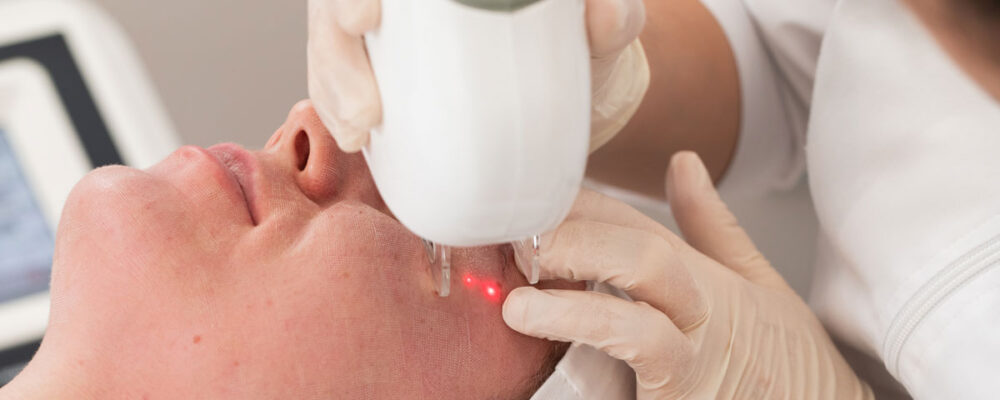
If you’re considering laser skin resurfacing, you probably want to know: what sets the advanced HALO® TRIBID™ treatment apart from more “traditional” laser options? At Resurrect Skin MD, our goal is to help you understand why HALO TRIBID is a game‑changer, and whether it might be right for you. In this blog we’ll contrast HALO TRIBID with the standard ablative and non‑ablative lasers (“traditional lasers”) and explain, in clear terms, how this advanced technology works, what advantages it offers, and what to consider.
What Are “Traditional” Laser Resurfacing Treatments?
To appreciate how HALO TRIBID is different, we first need to understand what “traditional” laser resurfacing means. Broadly speaking, skin resurfacing lasers fall into two main categories: ablative and non‑ablative.
Ablative lasers operate by removing (ablating) the outer layers of the skin (epidermis and sometimes superficial dermis) and simultaneously heating deeper tissue. This triggers the skin’s renewal process, strong collagen production, and a dramatic improvement in texture and tone. These types of lasers are great for addressing deep wrinkles, scars, and severe sun damage. However, they come with longer downtime (sometimes 1–2 weeks or more), a higher risk of side effects like redness or pigmentation changes, and more intensive after-care requirements.
Non‑ablative lasers, on the other hand, heat the deeper layers of skin (dermis) without removing the surface layer (epidermis). Because the surface remains intact, recovery is gentler, and downtime is shorter. The trade-off is that the effects are more gradual, typically requiring multiple sessions, and results are less dramatic than with ablative lasers.
Many modern lasers use fractional technology, which delivers energy in a grid-like pattern, treating only a fraction of the skin’s surface at a time. This allows untreated skin to aid in faster healing. Some hybrid fractional lasers combine both ablative and non‑ablative approaches in a single pass, such as the earlier generation HALO.
When we refer to “traditional” lasers, we’re talking about devices that offer one wavelength, typically focused on one concern at a time, requiring either more downtime or more sessions depending on their approach.
Introducing the HALO TRIBID Laser
Now let’s look at the HALO TRIBID laser and understand how it differentiates itself.
The HALO TRIBID is a next‑generation resurfacing laser developed by Sciton. It combines three distinct wavelengths into a single handpiece, allowing treatment of multiple skin layers in one session. These wavelengths include a 2940 nm Er:YAG for ablative resurfacing of the superficial skin layers, a 1927 nm wavelength for non‑ablative pigment correction, and a 1470 nm wavelength for deeper dermal remodeling that promotes collagen production.
With all three wavelengths in one device, the HALO TRIBID laser provides a more comprehensive treatment than traditional lasers. It addresses issues like texture, tone, and volume in a single session, which would typically require multiple devices or layered treatments.
This synergy allows HALO TRIBID to treat concerns like fine lines, sun damage, enlarged pores, acne scars, and uneven skin tone, all with more efficiency and precision. The device also features intelligent delivery systems like Dynamic Thermal Optimization (DTO) and optical tracking, which enhance safety and consistency.
The result is a customizable experience that targets multiple skin layers while minimizing downtime compared to older ablative technologies. For patients seeking visible improvement without extended healing, HALO TRIBID represents a significant advancement.
HALO TRIBID vs. Traditional Lasers — Side‑by‑Side Comparison
|
Feature |
Traditional Ablative / Non‑Ablative Lasers |
HALO TRIBID Laser |
|
Wavelength / Depth |
Usually single wavelength: either deep ablative (e.g., CO₂, Er:YAG) or non‑ablative (mid/dermal) | Combines three wavelengths (2940 nm, 1927 nm, 1470 nm) targeting superficial, mid, and deep layers in one device. |
| Number of sessions | Ablative often one, but longer downtime; non‑ablative multiple sessions |
One session may address multiple concerns; may still be follow‑ups depending on goals. |
|
Recovery / Downtime |
Ablative: higher downtime; non‑ablative: minimal downtime |
Moderate downtime: more than simplest non‑ablative, but far less than older full‑ablative methods. |
|
Scope of treatment |
Traditional lasers often limited to one issue at a time |
BROADER scope: texture, tone/pigment, deeper dermal renewal in same treatment. |
|
Efficiency / Workflow |
Possibly multiple devices/sessions → more time |
One handpiece, one workflow → smoother for provider and patient. |
|
Customization |
Some customization, but per device capabilities |
High customization: mix wavelengths, adjust depths and coverage per patient in same treatment. |
| Safety / Technology features | Older models may have more risk/longer healing |
Smart tech (DTO, optical tracking) improves safety and consistency. |
Why This Matters for You
If you have multiple skin concerns, sun damage, pigmentation, uneven texture, large pores, and signs of aging, HALO TRIBID may offer the ideal solution. Traditional lasers can address one or two of these concerns per session. HALO TRIBID allows us to tackle them all in one go.
For those who want to minimize treatment time, HALO TRIBID offers a single-session solution that might otherwise require several visits. Even better, this happens with less downtime than older ablative options. The smart technology built into HALO TRIBID ensures that energy is delivered more safely and uniformly, enhancing results and minimizing risk.
If you’ve already tried mild laser treatments and are ready for something more powerful, but not ready for the full downtime of traditional ablative lasers, HALO TRIBID bridges that gap. It offers the benefits of deep skin renewal with manageable recovery.
What to Consider Before Choosing HALO TRIBID
Not every treatment is right for every patient. Your skin tone, concerns, lifestyle, and budget all play a role in whether HALO TRIBID or a traditional laser will suit you best.
Darker skin tones may require special care and settings, even with advanced technology. Downtime tolerance also matters: HALO TRIBID has a shorter healing time than full ablative treatments but still involves 3–5 days of peeling and redness.
Cost is another factor. While HALO TRIBID may be more expensive upfront, the ability to combine three treatments in one session could ultimately save time and money.
Lastly, choose an experienced provider. At Resurrect Skin MD, we tailor every treatment plan to your skin’s unique needs and your personal goals. We also use VISIA® skin analysis for a detailed understanding of your skin health before making recommendations.
Final Thoughts
The HALO TRIBID laser stands out as a powerful, versatile option for skin resurfacing. It merges the benefits of ablative and non‑ablative technologies, offering transformative results with less downtime. Compared to traditional laser resurfacing treatments, HALO TRIBID is more efficient, more customizable, and often more effective at addressing multiple skin concerns in one session.
Whether you’re looking to erase sun damage, smooth out texture, reduce fine lines, or rejuvenate your overall appearance, HALO TRIBID may be the solution you’ve been searching for. Schedule a consultation at Resurrect Skin MD to learn more about whether this treatment is right for you.
